
Introduction to Digital Storytelling
 | Action-oriented Approach|Plurilingualism|Tech-mediated
This infosheet provides language teachers with insights and practical resources for integrating Digital Storytelling (DST) into their classrooms. DST supports an action-oriented pedagogy and embraces plurilingualism by valuing students’ diverse linguistic and cultural repertoires.
What is digital storytelling? 🧠
Digital Storytelling (DST) combines multimedia elements (such as images, video, audio, and text) enabled by modern digital tools with narrative practices to support language development through personal and collaborative written and oral expression. It moves beyond traditional text-based tasks, harnessing technology to craft engaging stories based on personal experiences, historical events, or even fictional creations. DST can also be used to promote student-led initiatives to foster social justice awareness and critical thinking through plurilingual and pluricultural stories in the classroom.
To learn more, check out this tutorial from College Libraries Ontario: Digital Storytelling tutorial
Why use digital storytelling (DST) in the L2 classroom? 💡
Research highlights multiple benefits of using DST in language education:
- It boosts student motivation and engagement. (Liu et al., 2018; Robin, 2016)
- It fosters creativity. (Liu et al., 2018)
- It enhances literacy development in the target language (especially writing and speaking), promoting multimodal expression, and digital literacy. (Chan et al., 2017; Tahriri et al., 2015)
- It encourages learner autonomy, agency, and peer collaboration.
- It can support students’ plurilingual and pluricultural identity expression, giving them a platform to share their experiences and cultures (Liu et al., 2018).
- Students become active creators of meaning rather than just passive recipients of it (Niemi and Multisilta, 2016)
Steps for students to develop DST in class 👣
The following graphic by Samantha Morra outlines the key stages of the DST process for students:
8 Steps to great digital storytelling
- Come up with an idea: Write a proposal
- Research/Explore/Learn
- Scriptwriting
- Storyboarding (Planning)
- Gather/create material (Images, audio, video, etc.)
- Put it all together
- Share your digital story
- Receive and provide feedback from peers and reflect on it
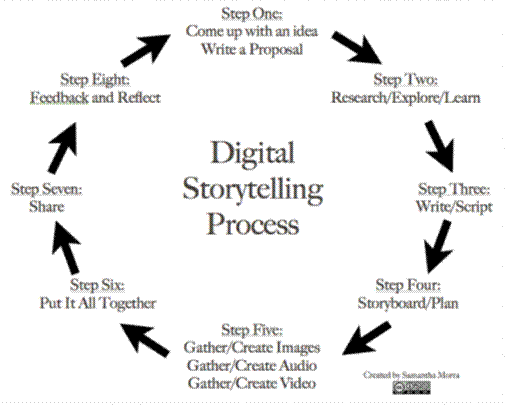
8 Steps To Great Digital Storytelling
How to get started with digital storytelling ▶️
Explore these tutorial pages to introduce DST in your classroom:
- Article: How to Get Started with Digital Storytelling
- Examples of Digital Stories: StoryCentre YouTube.
Tools to integrate DST in your classroom 💻📲
- Canva: For visuals, infographics, and video creation
- StoryJumper: Digital book creation, great for young learners
- Book Creator: Interactive storytelling with multimedia
- Wattpad: Story writing and sharing platform
- Google Slides: For storyboards and visual narration
- PowerPoint: To create narrated story presentations
- CapCut: A simple video editor for mobile storytelling
AALE Toolkit Homepage | Action-oriented Approach | Plurilingualism | Tech-mediated | AALE Infosheets Exploration