
Comparing Plurilingualism to Multilingualism
 | Action-oriented Approach|Plurilingualism|Tech-mediated
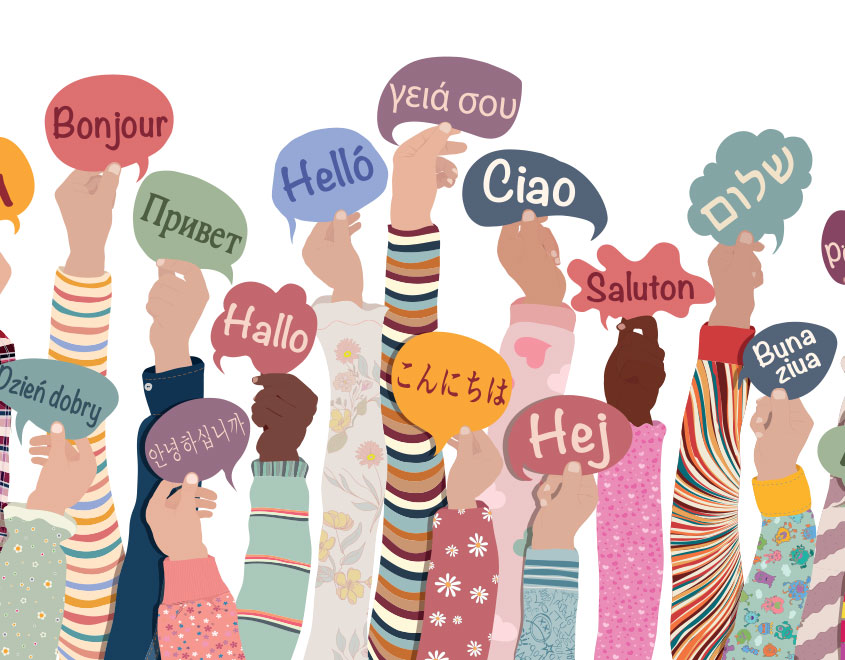
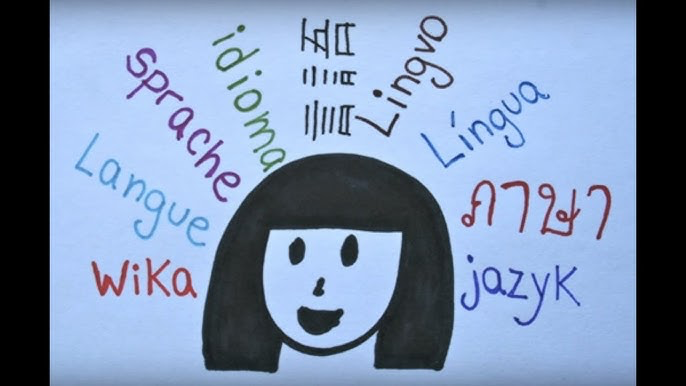
Societal multilingualism or individual plurilingualism? (Left image from: https://varthana.com/school/multilingualism-in-schools-celebrating-language-diversity-and-promoting-inclusion/; right image from: https://www.youtube.com/watch?v=9EfvwZ_bOcY)
What’s the difference between plurilingualism and multilingualism? 🧠
You might have heard the terms ‘multilingualism’ and ‘plurilingualism’ used in language education—and while they sound similar, they may mean different things.
Multilingualism usually refers to the presence of more than one language in a country, school, or community. It focuses on how many languages are spoken in a particular place, regardless of whether individuals use them all. In this view, languages often exist side by side but are treated as separate systems. For example, Statistics Canada (2023) describes Canada as a multilingual country, noting that “more than 3.1 million households in Canada (21.0%) were multilingual, meaning that at least two languages were spoken in those households.”
Plurilingualism, introduced by the Common European Framework of Reference for Languages (Council of Europe, 2001; 2020), refers to how people use all the languages they know in flexible and interconnected ways. Instead of treating languages like separate boxes, plurilingualism views them as part of one integrated system. A plurilingual person has plurilingual and pluricultural competence, meaning they can move among languages as needed—drawing on different words, expressions, and cultural knowledge from their full language repertoire to communicate, solve problems, or express themselves.
For example, in a multilingual classroom, we might have students from many parts of the world who speak different first languages. However, these students are also plurilingual: they can communicate with one another using languages, expressions, and cultural knowledge they’ve gathered throughout their lives—even if they’re not fluent in all of them.
In short, multilingualism describes how multiple languages can coexist in a society, while plurilingualism highlights how individuals actually use their multiple languages in real life. It values the ways students already navigate across languages and encourages them to make connections between languages—mixing and matching when it helps their learning.
Importantly, it’s not just individuals who can be plurilingual—whole classrooms, communities, and societies can also be plurilingual (Chung & dela Cruz, 2024). This happens when we create spaces where all languages and cultures are welcomed and where students are encouraged to use their full linguistic and cultural repertoires. In a plurilingual classroom, students would be encouraged to bring all those languages into learning—such as by comparing sentence structures, translating words, or using their home language to explain a new idea (Galante et al., 2022).
References 📝
Chung, R., & dela Cruz, J. W. N. (2024). Pedagogies of inclusion must start from within: Landguaging teacher reflection and plurilingualism in the L2 classroom. In A. H. Charity Hudley, C. Mallinson, & M. Bucholtz (Eds.), Inclusion in linguistics (pp. 291-312). Oxford University Press. https://doi.org/10.1093/oso/9780197755303.003.0015
Council of Europe. (2001). Common European Framework of Reference for Language (CEFR): Learning, Teaching, Assessment. Cambridge University Press. https://rm.coe.int/1680459f97
Council of Europe. (2020). Common European framework of reference for languages: Learning, teaching, assessment. Companion volume. Council of Europe. https://rm.coe.int/common-european-framework-of-reference-forlanguages-learning-teaching/16809ea0d4
Galante, A., Chiras, M., dela Cruz, J. W. N., & Zeaiter, L. F. (2022). Plurilingual guide: Implementing critical plurilingual pedagogy in language education. Plurilingual Lab Publishing.
Statistics Canada. (2023, June 21). Multilingualism of Canadian households. 2021 Census. https://www12.statcan.gc.ca/census-recensement/2021/as-sa/98-200-X/2021014/98-200-X2021014-eng.cfm
AALE Toolkit Home | Action-oriented Approach | Plurilingualism | Tech-mediated | AALE Infosheets Exploration